Mining revenue is one of the few things in this trade that reduces to arithmetic you can check on the back of an invoice. Your machines produce a share of the network’s hash rate; the network issues a fixed number of bitcoin a day; you earn your share of it, and you pay for the electricity that produced it.
That is the entire model:
Your share = your terahash ÷ network terahash. Daily issuance = 144 blocks × 3.125 BTC = 450 BTC. Gross revenue = share × 450 × the BTC price. Net = gross − (kilowatts × 24 × your tariff).
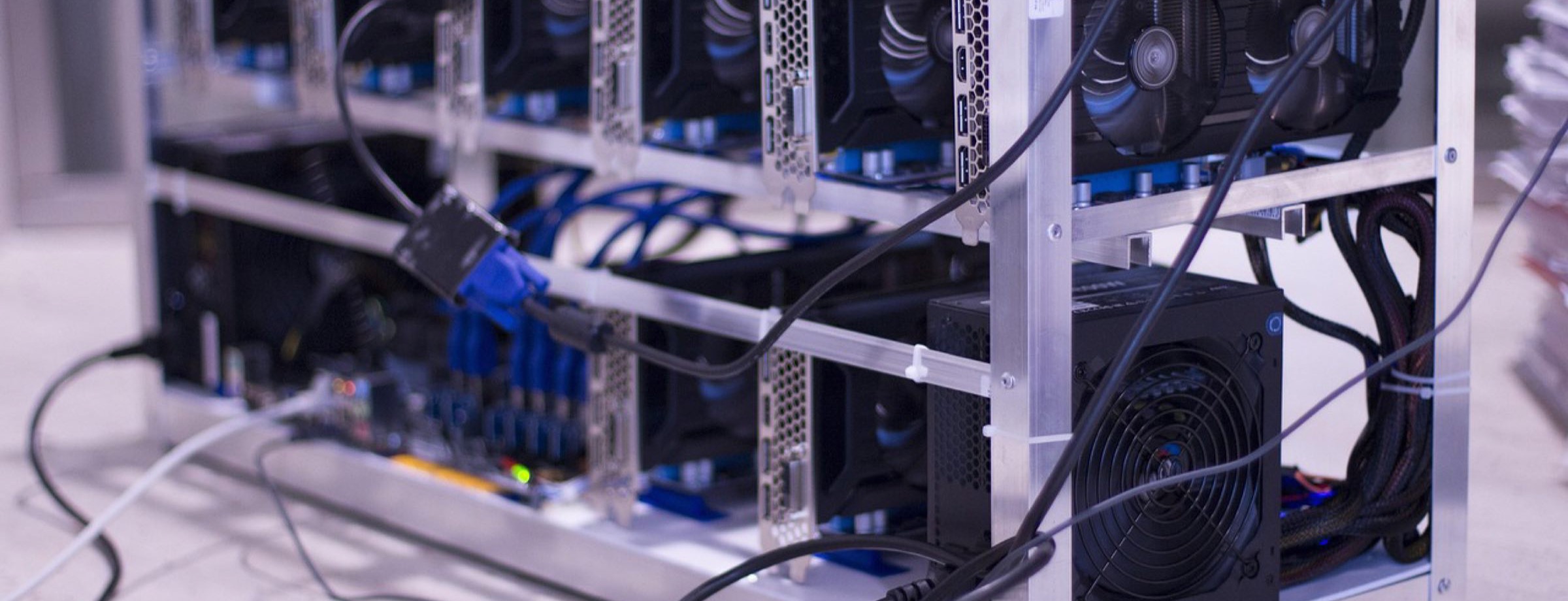
Run it for sixty S21 XP units at today’s numbers — BTC around $62,800, network around 900 EH/s, power at $0.055. Sixteen and a fifth petahash against nine hundred exahash is 0.0018% of the network, which is 0.0081 BTC a day, about $510. The fleet draws 219 kW, so energy is $289 a day. Net is roughly $221 a day, $6,700 a month, against $312,000 of hardware. Payback lands a little under four years.
That is not an exciting number, and it is the correct one for August 2026.
The three assumptions that matter
The BTC price is the obvious one, and the one buyers over-weight. It scales revenue linearly: double the price, halve the payback. Nobody can tell you where it goes.
Network hash rate is the one buyers under-weight, and it usually moves against you. Every machine anyone else installs dilutes your share. The network has run between roughly 890 and 920 EH/s through this summer, down from 1,100 EH/s last November — which is why current payback figures look better than they did a year ago, and why they will look worse again when hash rate recovers. If you want one sensitivity to run, run this one.
Your tariff is the only input you actually control, and it is the one worth negotiating hardest. At $0.055 the fleet above nets $6,700 a month. At $0.08 it nets $2,900. At $0.10 it nets close to nothing. Half a cent on the power contract is worth more than any discount you will win on the hardware.
What the model leaves out
Pool fees, one to two per cent off the top. Difficulty drift between purchase and energisation, which on a sixty-day lead time is real. Downtime — no hall runs at 100% uptime, and 97% is a good year. Maintenance, spares and the person who fits them.
None of that is hidden to make the number look better; it is left out because those figures are yours, not ours, and folding our guesses into your model helps nobody. Take the output as a ceiling and discount it by five to ten per cent for a hall that is run properly.
Reading a payback figure honestly
A payback line is a snapshot of today’s conditions projected flat, and conditions are never flat. Its real use is comparative: it tells you whether machine A beats machine B on your site, which is a question it answers reliably even when the absolute figure ages.
So use it to choose between configurations, not to decide whether mining works. And when a supplier shows you a payback of eleven months, ask which BTC price and which network hash rate produced it. The two numbers are always in there somewhere, and they are usually the reason the answer looked so good.